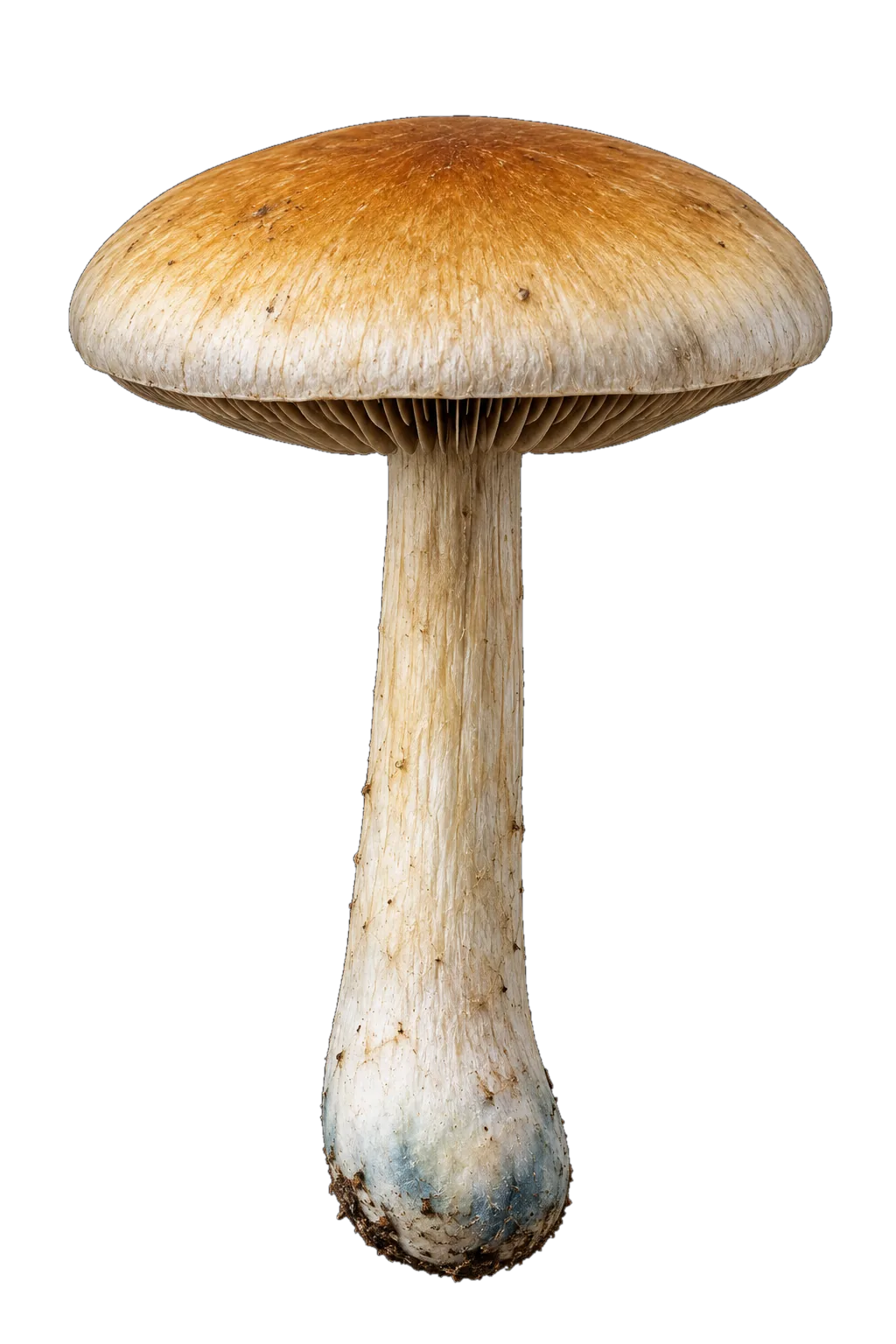
Studio illustration of a single mushroom with a golden-brown cap, dark gills and a pale stem

Psilocybe cubensis is a mushroom.

Cap, gills, spores. Look closely and Costa Rica’s Psilocybe cubensis is simply a mushroom: a pasture-associated decomposer in a living landscape of soil, rain and returning nutrients. Its chemistry is famous. The organism came first.

Family
Hymenogastraceae; genus Psilocybe.
Habitat
Cattle dung and nutrient-rich soils in warm tropical pasture.
Ecology
A decomposer associated with grazed grassland.
Range
Tropical and subtropical regions around the world.
Costa Rica
Documented by curated biodiversity guides and locality-bearing field observations.
Chemistry
Contains psilocybin and psilocin, molecules studied separately from the organism.
Look closely. Leave it growing.

Do photograph, note the habitat and learn with an experienced naturalist. Respect private land and protected-area rules. Don’t pick or disturb wild fungi: a guide’s presence alone does not replace landowner permission or any required wildlife authorization. Keep field study observational.

Illustrated field notebook

What the evidence can show

P. cubensis is described through its cap, gills, spores, stem and habitat. A verified observation establishes a documented identification; cap color or bruising alone cannot do that. The species contains psilocybin and psilocin, with effects and potency that vary.

Abstract cluster of small mushrooms

Similar looks, different chemistry

Small brown mushrooms can be deceptively alike. Poisonous species may be mistaken for psilocybin-containing mushrooms, and the mistake can be fatal. Appearance cannot establish chemical contents or safety. This collection is for natural history, never a consumption checklist.

NIH on effects and poisoning risks ↗