Costa Rica mushroom law · primary sources first

The Mushroom is not the Molecule

This is the part most travelers never get told cleanly. The mushroom in the grass and the molecule in a lab are different legal objects. International control, on INCB’s own wording, is about the substance in its molecular form. Costa Rica still reads each form — mushroom, food, extract, commercial product — on its own terms.

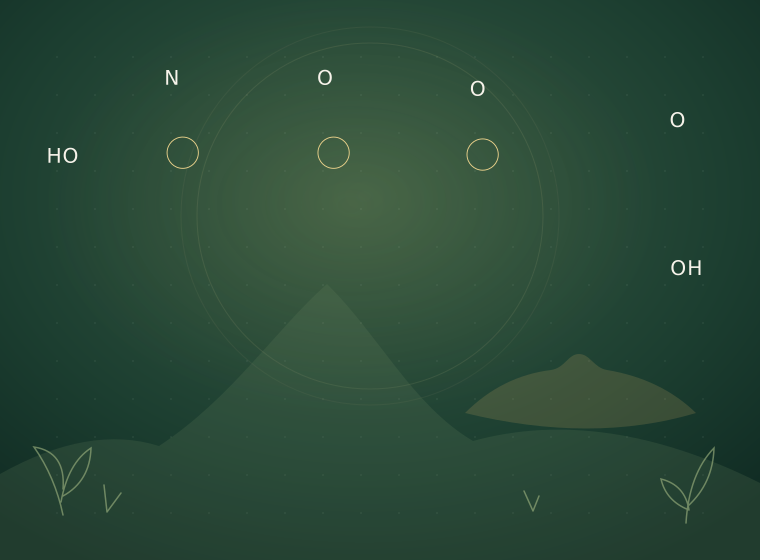
Animated line drawing of a psilocybin molecule above a mushroom and Arenal Volcano

TL;DR · INCB 2025

“only the substance in its molecular form is controlled.”

INCB says naturally occurring fungal material — including mushroom species containing psilocybin and psilocin, and preparations made from natural fungal material — is not under international control under the 1971 Convention merely because it contains those molecules. INCB also says national governments may adopt broader domestic controls.

Costa Rica distinguishes personal use from prohibited supply.

The Ministry of Health list reviewed in August 2026 expressly names psilocybin and psilocin, without a separate entry for the Psilocybe organism. The 1971 treaty framework controls the molecules; INCB expressly distinguishes natural fungal material. Costa Rican law also uses broader domestic terms — “drugs, substances or products” — whose application to an intact mushroom remains unresolved in the published decisions located by our research. Absence of a species name alone cannot settle that question.

Personal use

Personal consumption itself is outside Article 58’s trafficking offense. Authoritative summaries describe possession for personal use as decriminalized; there is no fixed statutory quantity allowance. Authorities assess the circumstances and purpose, and confiscation can still occur.

Supply and commerce

Products, therapeutic advertising and administration can engage Ministry of Health registration, establishment and professional requirements alongside criminal law. The Ministry’s January 2025 ayahuasca and ibogaine warning makes these obligations explicit. A retreat’s existence establishes neither authorization nor a legal exemption.

Unregulated doesn’t mean lenient

Article 58 provides a general 8–15-year prison range for specified unauthorized trafficking and supply conduct involving controlled drugs, substances or products. Quantity can be evidence of purpose, but no single amount automatically separates personal use from trafficking. Visitors considering any supply or commercial activity need qualified Costa Rican legal advice.

Personal-use non-criminalization leaves supply as a separate legal question and leaves the status of each mushroom, preparation, extract, food or commercial product dependent on its form and activity.

International & Costa Rican authority

Ministry of Health — 27 January 2025

The national warning advises against therapeutic ayahuasca and ibogaine use without sanitary registration, and against rituals using psychoactive substances for therapeutic purposes. It addresses product registration, therapeutic claims and professional authorization.

Read the official health warning ↗

INCB — Psychotropic Substances 2025

The current technical explanation of molecular substances, natural fungal material and the national-control caveat.

Official INCB PDF ↗

Costa Rica Ministry of Health — JVD lists

The current national source listing controlled narcotic and psychotropic substances.

Official lists ↗

PGR C-031-2025

An ayahuasca administrative-law opinion whose useful lesson is identifying a concrete rule. Its holding concerns an Article 173 annulment proceeding.

Official PGR source ↗

Library of Congress

An authoritative comparative summary of Costa Rica's treatment of personal consumption and possession.

Read the country summary ↗

UK travel advice

Current traveler-facing guidance on Costa Rica's severe penalties for drug trafficking.

Official UK guidance ↗